the old man
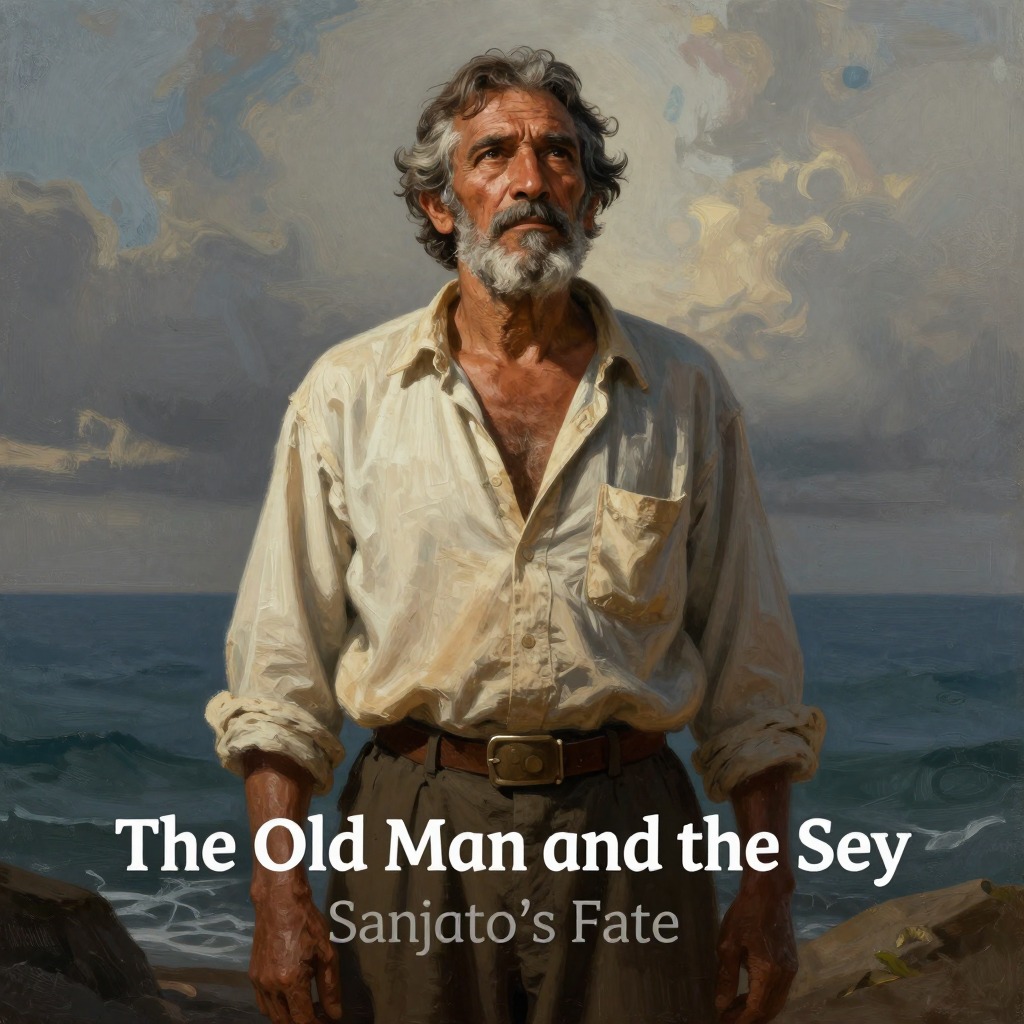
The old man, Santiago, is the central figure of Ernest Hemingway's The Old Man and the Sea, an aging Cuban fisherman whose epic battle with a giant marlin and subsequent loss to sharks transforms him into a universal symbol of human endurance and dignity. He is introduced as a man who has gone eighty-four days without catching a fish, his sail patched with flour sacks and furled "like the flag of permanent defeat," yet his eyes remain "cheerful and undefeated." This paradox—outward ruin paired with inward resolve—defines his character and the novella's core theme: that a man can be destroyed but not defeated.
Identity and Background
Santiago is a thin, gaunt old man with deep wrinkles on his neck and brown blotches of skin cancer on his cheeks from the sun's reflection on the tropic sea. His hands bear deep-creased scars from handling heavy fish, but none are fresh; they are "as old as erosions in a fishless desert." Everything about him is old except his eyes, which are "the same color as the sea and were cheerful and undefeated." He lives in a shack made of guano—the tough budshields of the royal palm—with a bed, a table, one chair, and a dirt floor for cooking. On the walls hang a color picture of the Sacred Heart of Jesus and another of the Virgin of Cobre, relics of his deceased wife, whose tinted photograph he removed because it made him too lonely. He is too simple to wonder when he attained humility, but he knows he has it and that it carries no loss of true pride. He has gone turtle-ing for years off the Mosquito Coast, which he says kills the eyes, yet his own eyes remain good, and he calls himself "a strange old man."
Life and Plot Trajectory
Santiago's life is defined by his solitary fishing. After eighty-four days without a fish, the boy Manolin, whom he taught to fish and who loves him, is forced by his parents to leave Santiago's boat for a luckier one. Santiago sets out alone before dawn, rowing far out into the Gulf Stream, and hooks a giant marlin that tows his skiff for two days and nights. He endures physical agony—a cramped left hand, line cuts on his hands, and the cord across his back causing pain that "had almost passed pain and gone into a dullness that he mistrusted." He eats raw fish to keep his strength, drinks only a bottle of water, and talks aloud to himself, the fish, and a visiting warbler. He kills the marlin with a harpoon, lashes it to his skiff, and sails for home, but sharks attack the carcass. He fights them with harpoon, knife, club, and tiller, losing his weapons one by one. By midnight, a pack of sharks strips the marlin to a skeleton. Santiago returns to harbor exhausted, carrying his mast up the road, falling five times before reaching his shack, where he sleeps face down on newspapers with his hands palms up.
Key Actions and Objectives
Santiago's primary objective is to catch a great fish, which he sees as his destiny: "Now is the time to think of only one thing. That which I was born for." He hooks the marlin at noon on the eighty-fifth day and vows, "I'll stay with you until I am dead." He kills the fish with a harpoon driven into its heart, then says, "I have killed this fish which is my brother and now I must do the slave work." When sharks come, he fights them with whatever is at hand, declaring, "I'll fight them until I die." He kills the first Mako shark by driving the harpoon into its brain, but loses the harpoon and rope. He lashes a knife to an oar butt to fight the shovel-nosed sharks, killing two, but the knife blade snaps. He uses a club and then the tiller, which breaks, and he lunges at the last shark with the splintered butt. His actions are driven by a code: he must prove what a man can do and endure, and he thinks of the great DiMaggio, who does all things perfectly even with the pain of a bone spur.
Relationships and Conflict
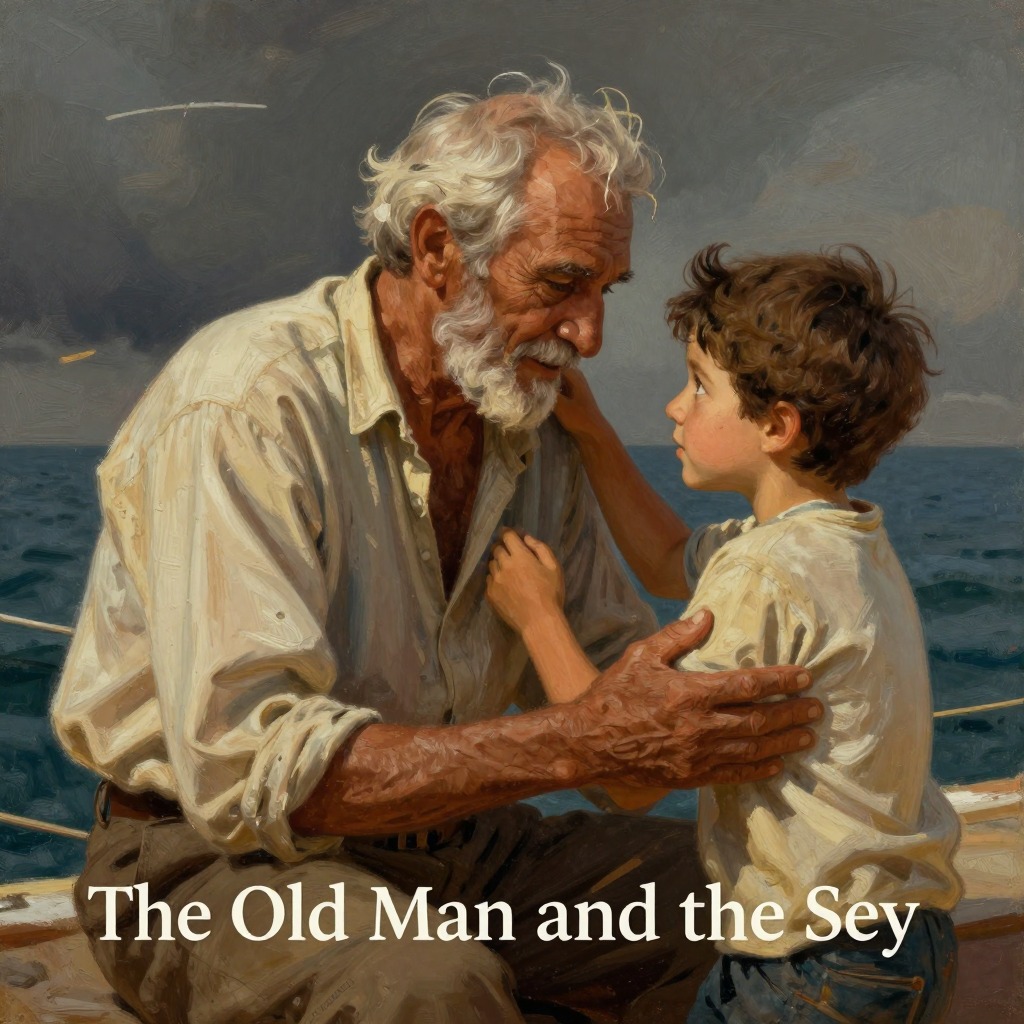
Santiago's primary relationship is with the boy Manolin, who loves him and serves him—bringing food, coffee, and sardines, and sitting by him after his ordeal. Santiago says, "I wish I had the boy" repeatedly during his struggle, and after returning, he tells Manolin, "I missed you." His relationship with the marlin is one of profound respect and kinship: he calls it "my brother," says "I love you and respect you very much," and feels sorrow for it, thinking, "You are killing me, fish... But you have a right to." He also reflects on the male marlin that stayed with its hooked mate, calling it "the saddest thing I ever saw." His conflict with the sharks is absolute; he calls the Mako "Dentuso" and the shovel-nosed sharks "Galanos," and he kills them with "resolution and complete malignancy." He also has a complex relationship with the sea, which he thinks of as feminine, "la mar," something that gives or withholds great favors, and he considers the flying fish and porpoises his friends and brothers.
Change and Ending
Santiago undergoes a physical and psychological transformation. He begins with hope and confidence, but after the shark attacks, he admits, "They beat me... They truly beat me." He tells Manolin, "I am not lucky. I am not lucky anymore." Yet he also says, "Nothing... I went out too far," accepting responsibility without self-pity. His hands are cut and swollen, and he feels something broken in his chest, but he plans to fish again with Manolin, discussing a new killing lance made from a spring leaf. The novella ends with him dreaming of the lions on the beach, a recurring image of his youth and vitality. The tourists at the Terrace mistake the marlin's skeleton for a shark, and the waiter does not correct them, underscoring the gap between Santiago's epic struggle and the mundane world.
Narrative Role and Evaluation
Santiago functions as a Hemingway code hero, a figure who faces overwhelming odds with grace, endurance, and a personal code of conduct. His story is a quest that ends in material failure but spiritual victory. The novella's famous line, "A man can be destroyed but not defeated," is spoken by Santiago himself, and his actions prove it. He is a Christ-like figure in his suffering—he carries his mast up the hill, falls, and lies with his arms out—but he is also a deeply human character, flawed and proud. His significance lies in his demonstration that meaning is created through struggle, not through success. The marlin's skeleton, measured at eighteen feet from nose to tail, is a monument to his effort, and his dream of the lions affirms that his spirit remains undefeated.